What AI Didn’t Make Cheap
How the job of the PM has changed, and how the products have too.
Jaclyn Konzelmann
Product Director, Labs


A niche problem, in a weird corner of the company
Google Assistant. The speech team. Non-deterministic models.
Now it’s the whole company.
If an agent can write the spec, build the prototype, run the analysis and draft the launch plan -
then what is the role actually for?
Generative AI made writing cheap.
It made prototyping cheap.
It made code cheap.
What it didn’t make cheap
is good judgment.
Judgment. Taste.
Knowing which ideas are worth anything in the first place.
That’s the real job now.
Two parts
- How the job of the PM has changedWhat I actually make now, instead of what I used to make.
- How the products have changedAnd some of the trends I’m seeing.
How the job has changed
A lot of this job is about knowing what to build.
And that isn’t trivial.
The PRD I was proud of
Multilingual Assistant. Every language pair. Every state conflict. What happens when the setting is half-applied. What the error looks like in each case.
It was good work. It was rigorous.
A career highlight.
And I wouldn’t start there at all today.
When both of those costs drop at the same time, the exhaustive spec stops being disciplined.
It starts being overhead.
Three things
A strategy doc.
One page, maybe two.
The work isn’t the writing. The work is the cutting.
Producing content isn’t the expensive part any more.
Requiring a human to consume it is.
A deck.
The doc is great for offline reading. The deck is for when you’re standing in front of people and you want them excited right now.
Three things, twenty seconds
“I can imagine wanting that.”
The feeling they should walk out with
The prototype.
Nobody argues with a feeling. It shows behavior, not intention - and interaction is what brings things to life.
The prototype is the new currency of conviction -
and it doesn’t care about your job title.
Photoshoot went viral.
It started as a prototype, not a spec. And prototypes now get made by everyone - PMs, UX, even the eng team.
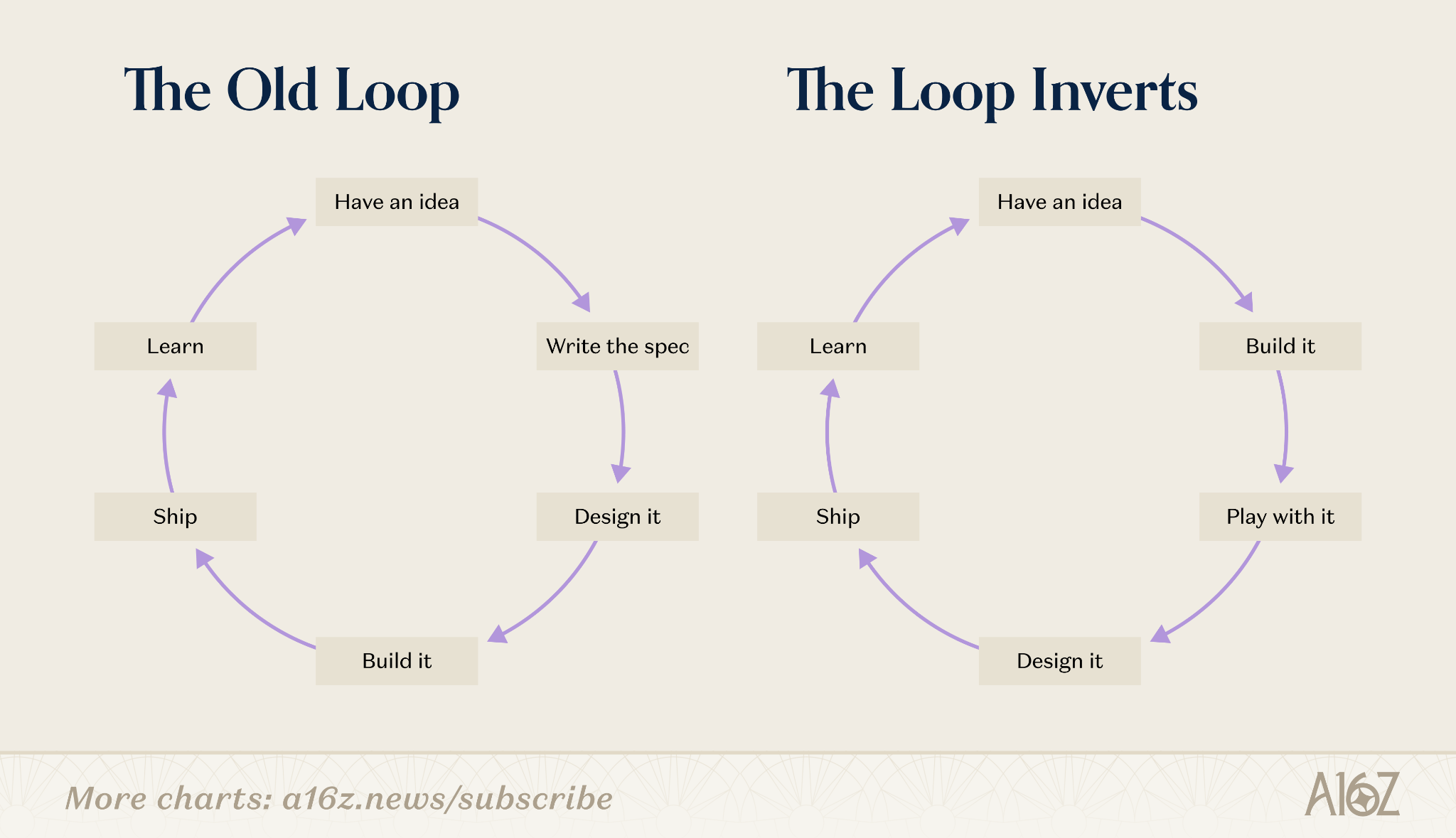
Josh Elman, a16z · Product Management is Still All About Telling Stories · September 2026
The PRD comes back. Just not first.
- Who it’s forWhat they expect, what they need, what they’re trying to get done.
- What it should actually doThe interactions. Not a never-ending list of edge cases.
- What good looks likeThe gold standard, and how you reverse-engineer your way to it.
- The frame the agent operates inThe rules and the boundaries, including what it must not do.
The overbuilding trap
Your elegant little MVP quietly becomes the bloated thing it replaced. One perfectly reasonable feature at a time - or one time you didn’t say no when an agent suggested adding something.
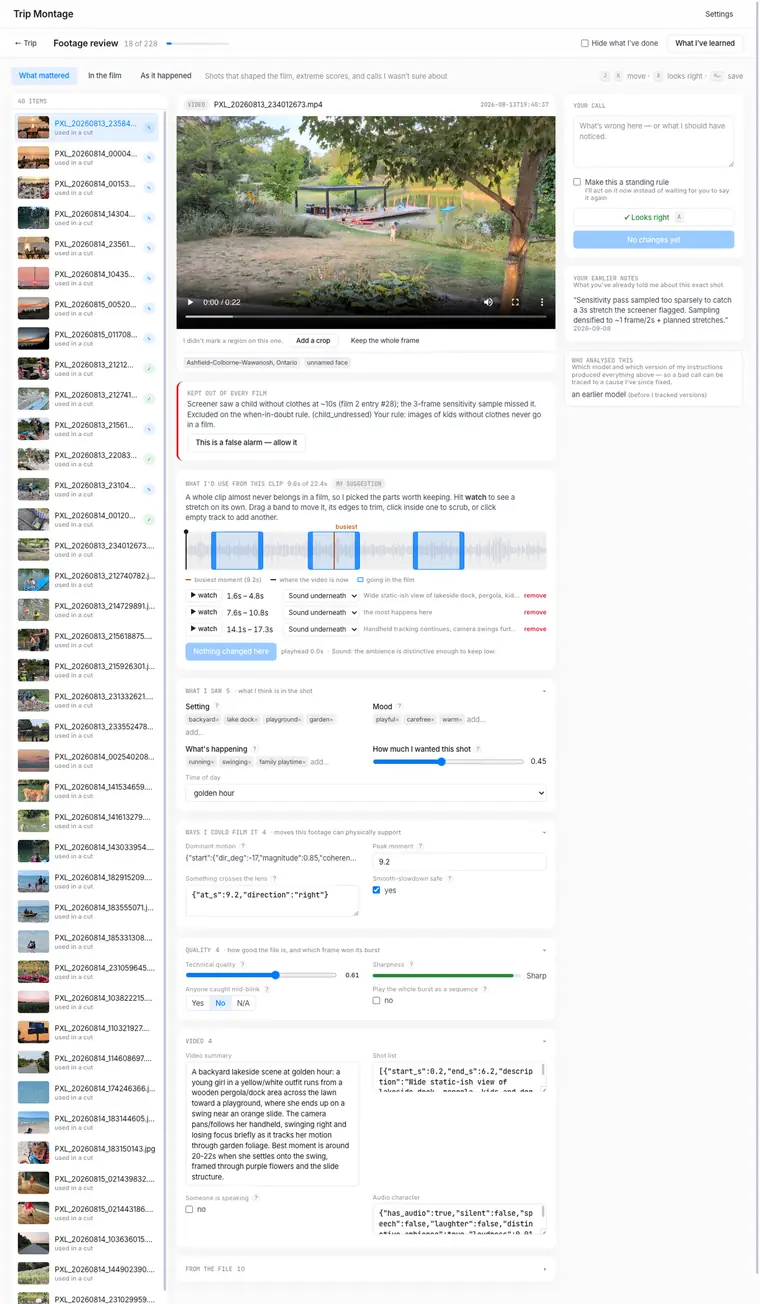
A side project of mine. Eight weeks after I published that piece.
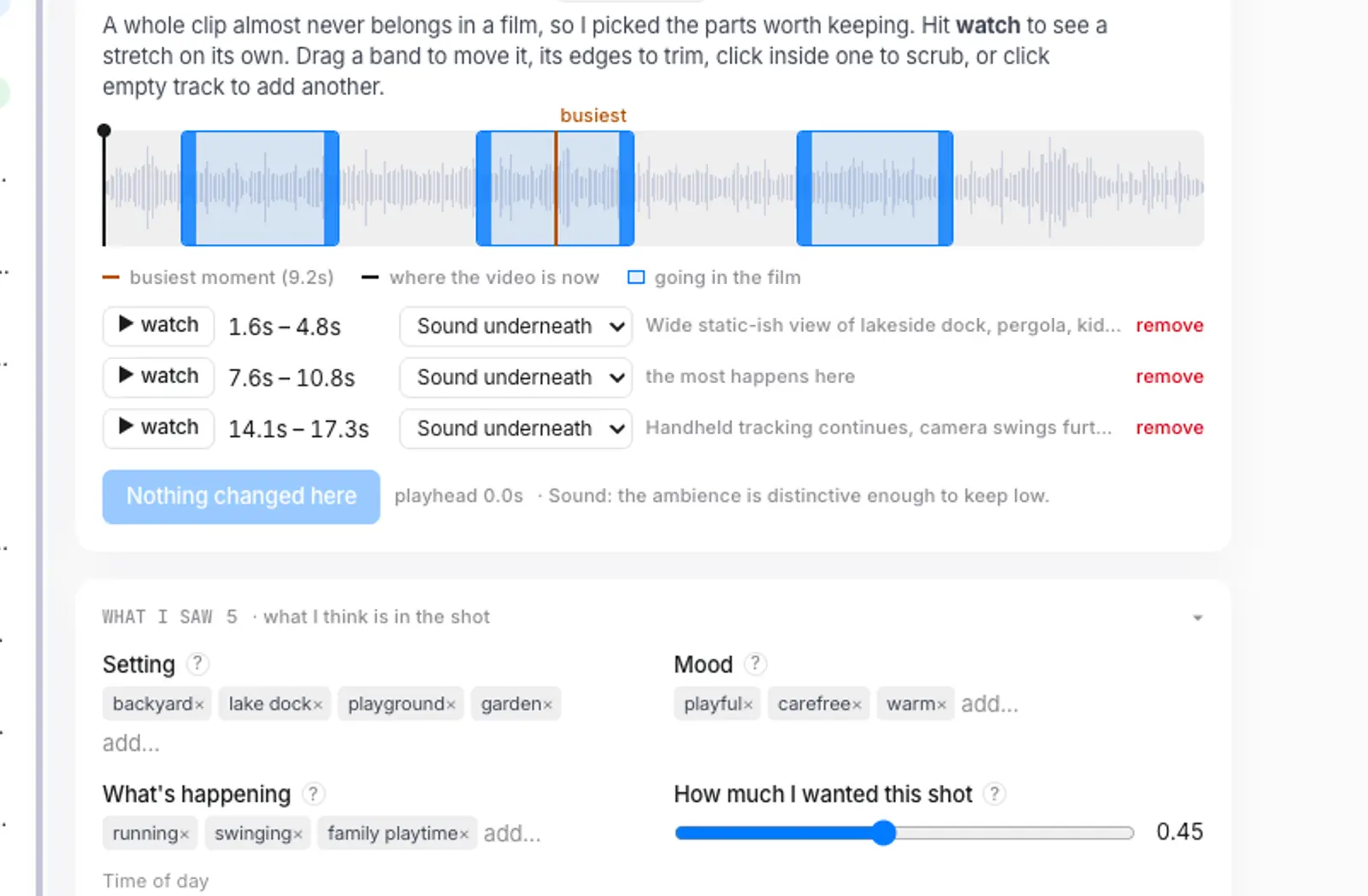
Count the toggles.
Nobody sets out to build a bloated product.
You get there one perfectly reasonable feature at a time.
If you were starting today, knowing everything you know now - would you build what you have?
The one test I run now
Obviously no.
More is not better.
It’s just more.
Before I have conviction in what to build,
I spend a long time just sitting with my thoughts.
The part that gets skipped over: the time it actually takes to come up with a good idea.
Curiosity, in public, for weeks
- Talking out loud in the microkitchenNot because I’ve got something. Because saying it is how I find out.
- Hallway collisionsSomeone snags on one piece, and that piece turns out to be the real one.
- Reading, X, talks like this oneSomething lodges. Then it sits.
The building got fast.
The curiosity still takes time.
What you choose to build is most of your value.
Recorded the brief. Recorded myself. Handed both to Gemini. Then argued with it.
You’re looking at the output of the process I’m describing.
Make AI your default first move.
Overcorrect on purpose. Push it past comfortable, find where it breaks, then dial back.
When something feels daunting, ask why.
Most of the time that dread is a memory. It’s cached from when the task genuinely was miserable.
Do side projects. I mean it.
Your day job shows you a sliver of what’s happening. Side projects are how you see the rest of the board.


How the products have changed
Three forces, all moving at once
I don’t have a tidy answer for what to build next. What I can offer is what’s helping me think it through.
The models and the harness
The surface area of what’s possible jumps weekly. If your product assumes last month’s ceiling, you’re already behind.
The ecosystem
Products are deciding whether any agent can use them, or only their agent. The contract of the internet is being renegotiated in real time.
Users
What people will trust an agent to do keeps shifting. You’re designing into a moving baseline of what counts as normal.
You don’t get to pick one force and ignore the others.
You build while all three are sliding.
Do it for me. Do it with me.
Not a point you pick. A dial your users disagree about.
Confident default, frictionless override
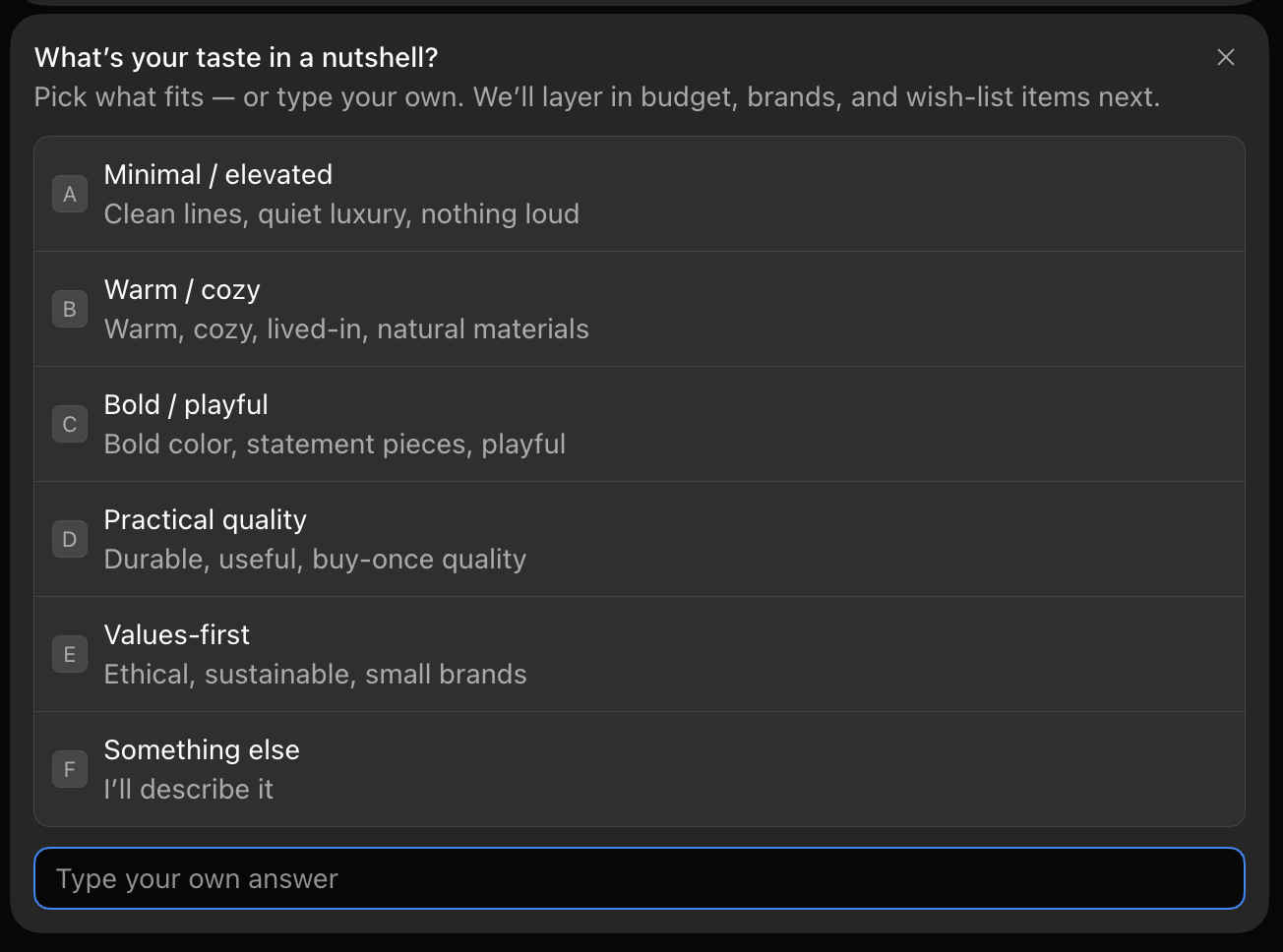
Confident default, frictionless override
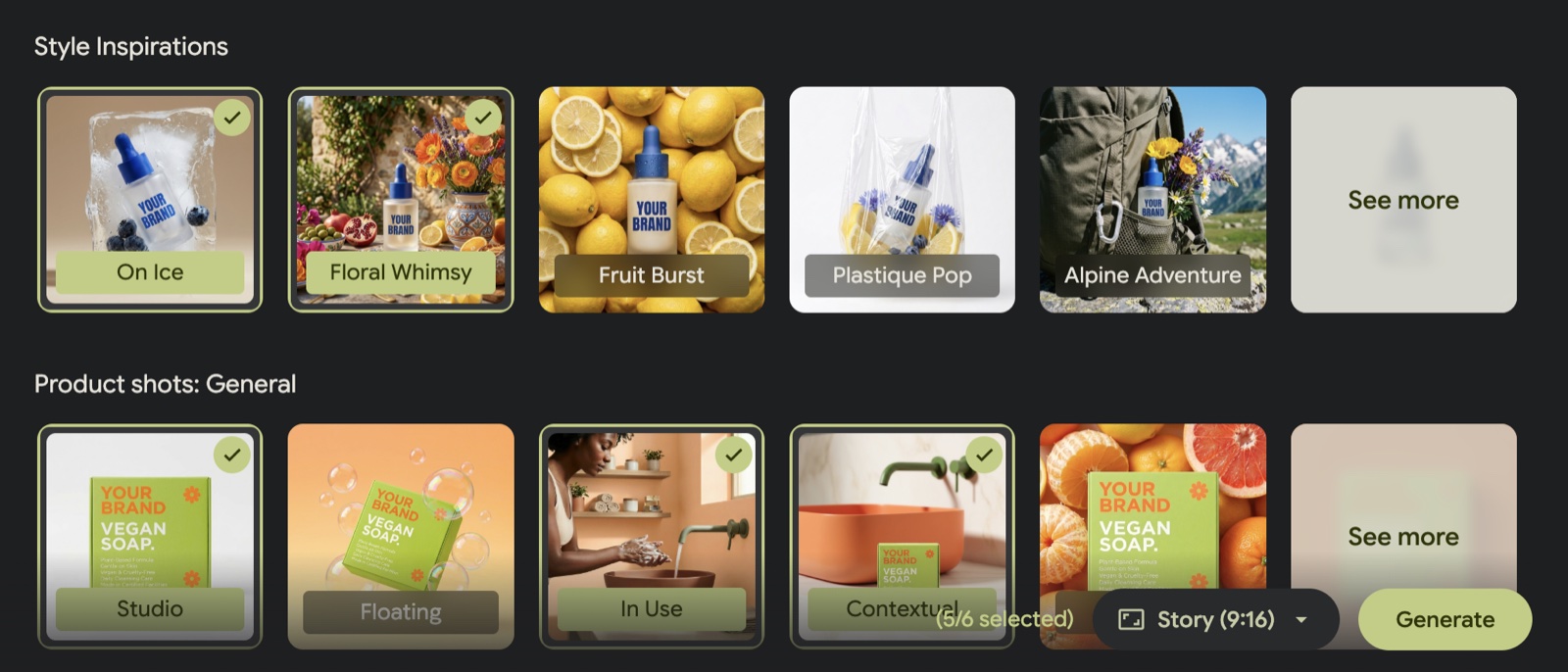
You don’t have one user. You have two.
The human user, and the agent user. The system has to work for both.
You don’t have one user. You have two.
The human user, and the agent user. The system has to work for both.
Is natural language a better interface than your UI?
Not all of it. But there are features buried three clicks deep in a menu that nobody ever finds, where just saying what you want would be better.
Do I build the agent?
Or do I power the agent?
I was never going to be a Blender user. I became one anyway, through an agent.
How this is playing out
- SalesforceHeadless APIs and MCP servers shipping alongside the core product.
- FigmaNative agent for power users. MCP access for everyone else.
- HarveyThe counter-case - legal work is specialised enough to own the whole agent.
Powering someone else’s agent grows your market.
It reaches the people who were never going to sit down and learn your tool.
One experience. Different people, different paths.
Some hand the whole thing to an agent. Some want to drive. Most want something in between, and it changes with the stakes.
Collapsing workflows
Products used to own one point in a workflow, and went deep there in service of being more capable.
Both ends are in reach now
What was the user doing right before they came to you?
And what do they do right after they leave?
Making this talk used to be three tools and three sittings.
Nobody shipped me that feature.
A workflow that collapsed
The pitch is cheap. The experience isn’t.
Anybody can describe an agent in a sentence. The product is everything that sentence leaves out.
Instinct
- How it hands results backThe thing you asked for, in the thread you asked in.
- How it nudges you firstProactive, and somehow not annoying.
- When it asks, and when it just goesOnly the questions worth your attention.
- What it remembersEarlier conversations, and which ones matter now.
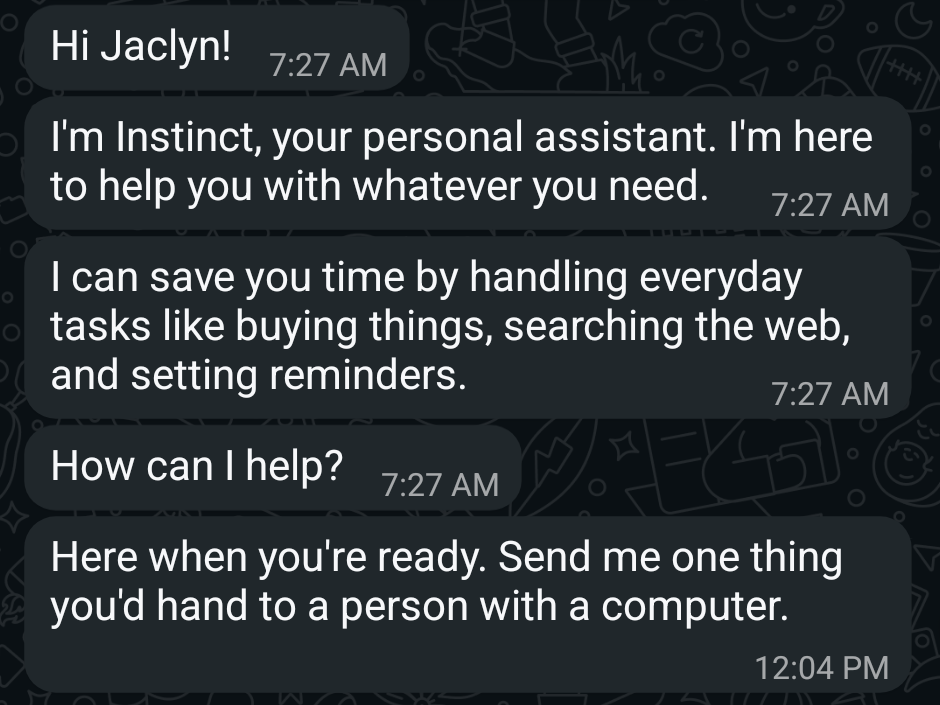
You can’t hand a one-line brief to an engineer and expect magic back.
Going deep on the experience is where taste shows.
So where does that leave us?
Automating the building doesn’t delete the job. It moves it.
The constraint used to be building. Now it’s knowing what to build, and knowing when it’s good.
An agent will happily build you something plausible.
Knowing the difference between plausible and good is the part you can’t hand off.
Generative AI made writing cheap.
It made prototyping cheap.
It made code cheap.
What it didn’t make cheap
is good judgment.
Thank you.
Jaclyn Konzelmann · @jacalulu